Cobalt carbonate About
Clients can avail from us the best quality cobalt carbonate that are widely known for their effectiveness in the market. Offered chemicals are processed as per the set industry standards with the help of latest processing methods and optimum quality chemical compounds. Ideal to be used as electroplating and finishing of metals, these chemicals are stringently tested on different parameters to ensure their longer self life. We offer these cobalt carbonate in different packaging options as per the requirements of the clients.
Features of cobalt carbonate:
- Accurate Composition
- Purity
- Easily Soluble In Water
- Longer Life
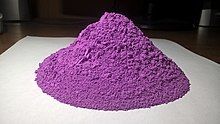
High-Purity Cobalt Carbonate for Laboratory UseOur cobalt carbonate is meticulously produced to a purity of 98%, ensuring reliable results for laboratory and industrial research. As an exporter, manufacturer, and supplier in India, Uma Chemicals provides this compound in secure 500gm bottles, designed to maintain quality during storage and handling. Its distinct pinkish-purple appearance and chemical stability make it ideal for diverse scientific applications.
Key Properties and Safe PackagingCobalt carbonate stands out due to its vibrant pinkish-purple powder form and its insolubility in water, offering unique advantages in certain chemical processes. The product's secure packaging in 500gm bottles safeguards its integrity, making it suited for laboratory-grade requirements and easy handling by professionals.
FAQ's of Cobalt carbonate:
Q: How should cobalt carbonate be stored to maintain its quality?
A: Cobalt carbonate should be kept tightly sealed in its original 500gm bottle, away from moisture and direct sunlight, at room temperature. Proper storage ensures the powder retains its purity and effectiveness for laboratory or industrial use.
Q: What is the typical usage of cobalt carbonate in laboratories?
A: In laboratory settings, cobalt carbonate is commonly used as a precursor for catalyst synthesis, pigment manufacturing, and in analytical chemistry. Its high purity and stable properties make it valuable in controlled scientific processes.
Q: When is cobalt carbonate preferred over other cobalt compounds?
A: Cobalt carbonate is preferred when insolubility in water is required, or when producing cobalt(II) oxide by calcination. Its specific pinkish-purple coloration can also be advantageous in pigment and colorant applications.
Q: Where can I purchase laboratory-grade cobalt carbonate in India?
A: Laboratory-grade cobalt carbonate can be procured from reputable suppliers, exporters, and manufacturers like Uma Chemicals in India, who provide the product in secure 500gm bottles for laboratory and industrial clients.
Q: What are the benefits of using cobalt carbonate in industrial processes?
A: Cobalt carbonate offers consistent chemical properties, high purity, and ease of handling, making it beneficial for catalyst production, pigment creation, and as an intermediate in synthesizing advanced materials.
Q: Describe the process for using cobalt carbonate as a precursor in chemical synthesis.
A: Cobalt carbonate is often thermally decomposed to form cobalt(II) oxide, which is subsequently used in the preparation of ceramics, pigments, or as a catalyst. The powder form ensures easy measurement and mixability in experimental setups.
Q: Why is cobalt carbonate's insolubility in water important for certain applications?
A: The insolubility of cobalt carbonate in water enables its use in processes that require a stable, non-reactive solid phase, such as in pigment production or in controlled-release chemical applications where minimal dissolution in water is crucial.

 English
 Spanish
 French
 German
 Italian
 Chinese (Simplified)
 Japanese
 Korean
 Arabic
 Portuguese









 Send Inquiry

 Send Inquiry

 Send Inquiry
 Send SMS
 Call Me Free